










THE DIFFERENT GUAGES:
Obviously, the thinner the guage, the more powerful the string, with lots
of spin potential. BUT...the string will be less durable, but you could allow
for that by going for a really thin, durable string.
Guage 15 (1.35 mm) is the standard guage for tennis.
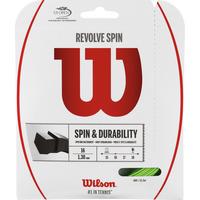
Guage 16 (1.30 mm) is the most popular guage for tennis (optimum level of
durability and power)
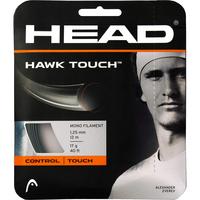
Guage 17 (1.25 mm) is "thinner than normal" guage for tennis and standard
for squash.
Guage 18 (1.20 mm) is the thinnest guage for tennis and "thinner than
normal" for squash.
Guage 21 (0.70 mm) is the standard guage for badminton.
Guage 22 (0.67 mm) is the thinner guage for badminton.
There will be minor variations from the different manufacturers, but basically
that is how the strings should be classified.
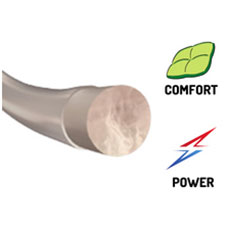
NATURAL GUT
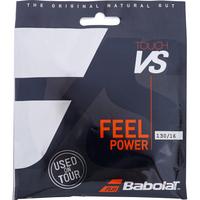
As the name would suggest, this is a natural product, literally from the
gut (mainly of sheep) of animals. This type of string is still favoured by the
purists for its optimum mixture of power, control and spin. The best modern
examples are made by Wilson and Babolat. It is, however the
most expensive and least durable of all the strings. It is also susceptible to
extremes in temperature and is especially liable to break under damp or wet
conditions. There is no man made string exactly like natural gut..but some of
the "multifilament" strings come close (eg Tecnifibre X-One Biphase or NRG
and
any of the Wilson multifilaments like K Gut, NXT or Sensation).
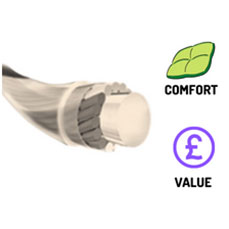
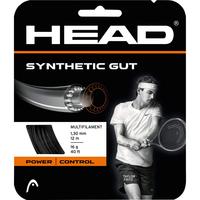
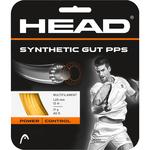
SYNTHETIC GUT
These are an extension (and improvement) on nylon strings, which were
brought
out few years ago,
to compensate for the lack of durability from natural gut. The classic example
is Prince Synthetic Gut. The majority of factory strung rackets are
strung
with
synthetic guts, and are a good choice for most people. They give a good
mixture of power and control with a "crisp feel and sound". They do not offer
much potential for spin, however, unless you go for a "textured or spin" type
like
Prince Topspin, or Head RIP Control, or tennisnuts Twizon. They are also
available
in a variety of different colours. Strings like "titanium strings" are
basically synthetic strings coloured silver! Synthetic strings are good on their own, or in combination with more
durable kevlars and polyesters.
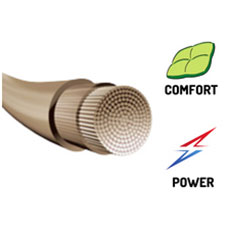
MULTIFILAMENTS
These are the best examples of using technology to replicate a product
that has been succesful over a number of years (natural gut). Thin starnds are
wound around (just like natural gut) to create different variations of SPIN,
power, control and durability. WILSON, with Sensation and NXT, were one of the
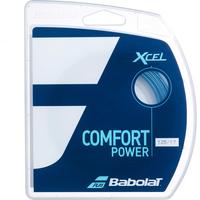
first companies to produce these strings, followed by Babolat (Xcel, Addiction
and Attraction) and Tecnifibre (with X-ONE Biphase and NRG).
Multifilaments are also a good choice for the majority of players as they
offer the optimum mixture of playability and durability. They are not as
durable as our next category (the polyesters), but are definately better on
the arm. In fact, for anyone suffering from tennis elbow or any kind of arm
problems, multifilaments are the best thing to go for...
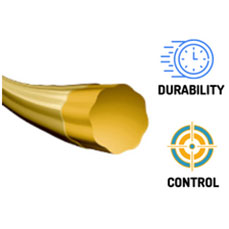
DURABLE POLYESTERS and KEVLARS
The latest development over the last few years has
been
the plethora of polyester strings, in a category created by Luxilon Big
Banger. This string was originally used by a number of PRO's looking for
durability and tension retention during matches. These types of strings are
all the rage at the moment as they provide the optimum level of power, control
and spin (a la Nadal). The majority of people now use the polyesters as a
HYBRID by combining with a Synthetic gut or multifilament, but some chronic
string breakers use them on their own. Watch out for that impact on the arm
though, especially in the case of youngsters. We would also recommend reducing
the tension when stringing with polyesters on the mains and crosses. Luxilon
still make the widest variety of polyester strings, with a number of different
offshoots of colour, texture and guage. Babolat make the best selling Pro
Hurricane, which is incredibly durable and playable. Federer uses a Hybrid
Luxilon/Wilson mixture called Champions
Choice, which is basically Luxilon Alu Power rough PLUS Natural Gut. Most
people use polyesters on the MAIN strings and anything else on the crosses.
Federer does it the other way around...with natural gut mains and Alu Power
Rough crosses...but hey he can do what he likes and he does not have to pay
for his strings. We would always recommend that the tougher string be used for
the mains.
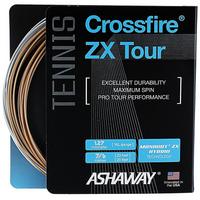
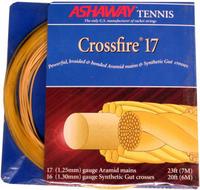
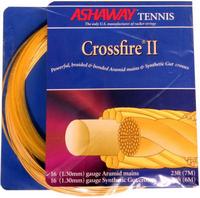
We only stock one Kevlar string (Ashaway) as it is not too harsh or hard
and its rough texture makes it a favourite as a hybrid main (eg Crossfire)
with a lot of our customers.
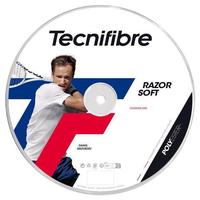
The latest Softer POLYESTERS and Multifilament Polyesters.
The latest idea in strings is that people want polyester strings that are
not that are not as harsh on the arm, but have all the other best
characteristics of polyester strings, without neccesarily being as durable as
the normal, original polyester strings. These strings can also be used on
their own without the need to combine them with anything else in a hybrid. A
number of strings have come out very recently that fit this bill....
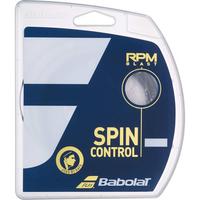
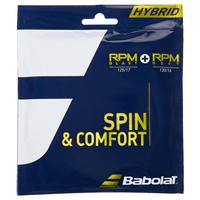
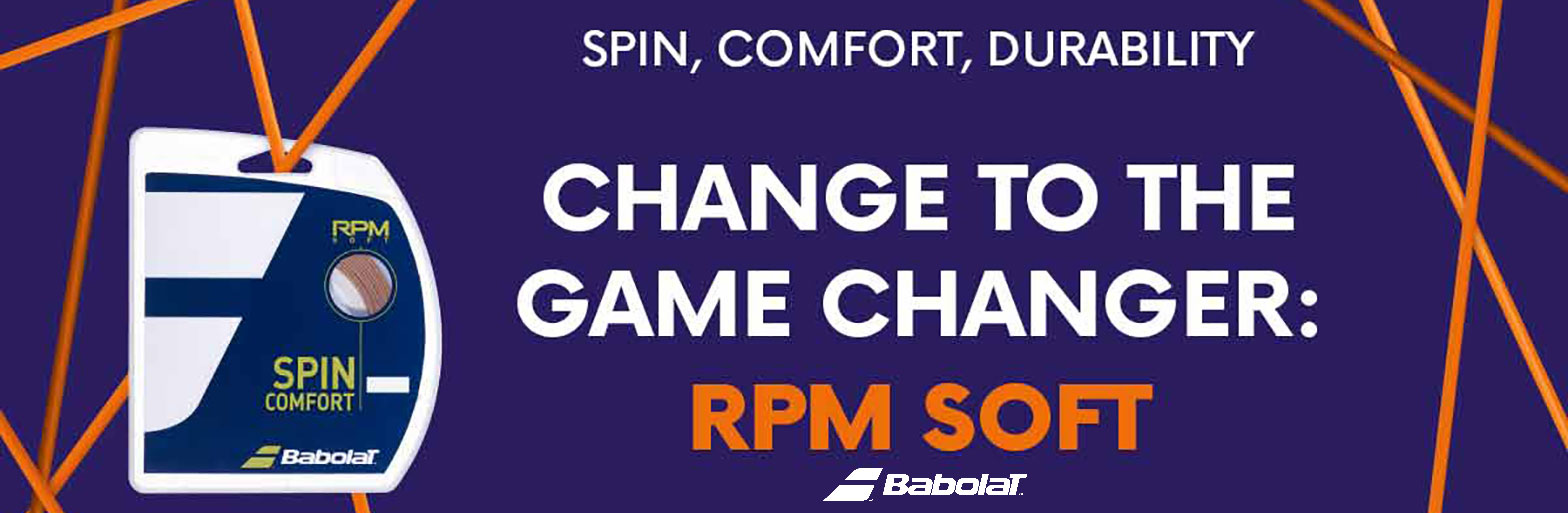
Babolat RPM Blast (Nadals new strings)
Head Sonic Pro
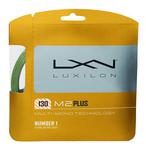
Luxilon M2 Pro and M2 Plus.
Babolat Pro Hurricane Tour
Tecnifibre X-Code
Tecnifibre Duramix HD
HYBRID COMBINATIONS
The majority of people now use the polyesters as a
HYBRID by combining with a Synthetic gut or multifilament. Federer uses a
Hybrid
Luxilon/Wilson mixture called Champions
Choice, which is basically Luxilon Alu Power rough PLUS Natural Gut. Most
people use polyesters on the MAIN strings and anything else on the crosses.
Federer does it the other way around...with natural gut mains and Alu Power
Rough crosses...but hey he can do what he likes and he does not have to pay
for his strings. We would always recommend that the tougher string be used for
the mains.
|